


Every person comes to an age when he starts thinking about a proper diet.Some people make this decision because they are overweight, others because they are struggling with illness.Lost in thought, a person re-reads a lot of literature in search of a suitable healthy diet.Which diet should you choose to get the maximum benefit?A professional nutritionist can provide advice.After all, if the question arises of changing your diet, doing it on your own can be expensive.
It must be understood that food can heal, but sometimes it can also cripple.Therefore, the basis of any diet should be based on the laws of natural harmony, only then will the diet be beneficial.
Nature created everything in a fantastic way.There are 4 seasons, 4 stages of growth, 4 cardinal directions.Surprisingly, there are also four blood types.Each of them has its own composition.Today, a special diet has been developed according to blood group, where specific products are selected for each of them.
Diet basics
Based on many years of medical practice, numerous consultations on nutrition and supporting the theory with his father's research, the American doctor Peter D'Adamo showed the world a unique nutritional method, which was later called the "Blood Type Diet".It was based on the assumption that weight, height and of course skin color are not the main differences between people.It all depends on the blood type.
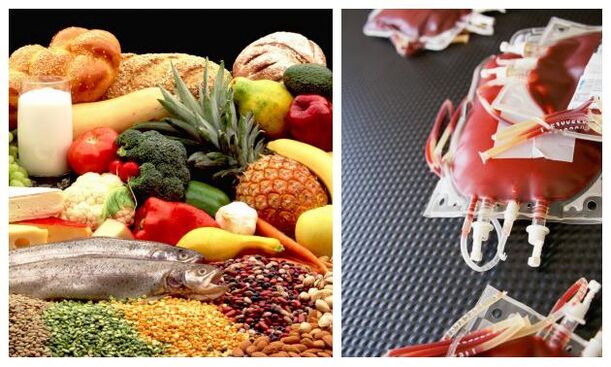
Lecithins, which saturate all tissues in the human body, come with food.These important building blocks of cells interact completely differently with blood types.The chemical composition of meat lecithins differs significantly from the component in vegetable foods.To have excellent health and longevity, you should eat the building materials that will bring more benefits to the body.
Selection of menu based on common ancestors
The blood type diet is based on an evolutionary division developed by the American immunochemist William Clouser Boyd.Based on this theory, owners of the same blood groups have a common past.This allows you to make a fascinating and, from a nutritional point of view, quite useful journey through time.
- Blood type 1. According to the doctor, these are human hunters.He believes that such a group is the blood of the very first people on the planet.Of course, the best diet will be food with a high meat content.
- Group 2. This population is classified as farmers.The ideal diet for this category of people is quite predictable.They are advised to eat a wide variety of vegetables and keep red meat to a minimum in their diet.
- Group 3. This defines the nomads.Those with this type of blood are characterized by strong immunity and unpretentious digestion.However, people with the third group should be very careful with dairy products.After all, their lactose intolerance is a historically proven fact.
- Group 4. These people are a unique mystery.This rare blood arose very recently and illustrates evolutionary variation as it combines the characteristics of different groups.
Product table
For convenience, below is a table with lists of products that should be included in the menu.For example, it is known that the diet must contain vegetables if a person has blood type 2. The diet, the table of recommended foods confirms this, although it may contain some other components.
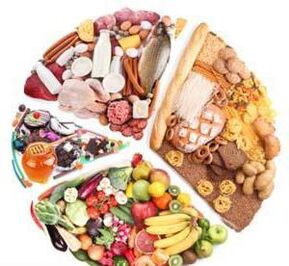
Healthy products
| 1 group | 2nd group | 3 group | 4 group |
| Fish, meat, a variety of shellfish, fruits (except sour), vegetables, green tea, rye bread, herbal decoction of rose hips, mint, ginger | Cheese (low-fat varieties), dairy products, legumes, soy milk, coffee, pineapple, juice, green tea and red wine | Meat (except chicken and duck), fermented milk products (non-fat), cereals (buckwheat and wheat are not allowed), eggs, fruit, vegetables, legumes | Rabbit, turkey, lamb, fish, dairy products, olive oil, legumes, nuts, grains, fruits (except sour), vegetables, green tea, coffee, herbal infusions |
In addition to healthy foods, the blood type diet contains so-called neutral foods.They are listed in the following table:
| 1 group | 2nd group | 3 group | 4 group |
| Beer, herbal tea from raspberry, chamomile, sage, ginseng, valerian, wine (red and white) | Hard milk cheese (low-fat), feta cheese, cottage cheese | Soy products, orange juice, black tea, wine, beer, coffee | Herbal tea (raspberry, mint, valerian), beer, wine |
Harmful products are also listed in a separate table.
| 1 group | 2nd group | 3 group |
| Cabbage (except broccoli), marinades, mayonnaise, ketchup, cornmeal (all products made from it), alcohol, tea with raspberry and aloe leaves, coffee | Dairy products, meat, peppers, wheat, sugar, ice cream, butter, herring, halibut, shellfish, caviar, rhubarb, tangerines, bananas, oranges, coconuts, soft drinks, black tea | Fish, shrimp, shellfish, duck, chicken, pork, corn, lentils, olives, peanuts, tomato juice |
Functions of representatives of group 1
Every "hunter" should know his positive sides.But you shouldn't rule out risk factors either.The blood type 1 diet requires that a product with a high protein content - meat - be present in the diet.
Such people, as a rule, are strong and self-sufficient, quite purposeful.
Positive aspects:
- excellent digestive tract;
- excellent immunity;
- the efficiency of cellular metabolism.
With all this, the owners of group 1 also have weaknesses.It is quite important to know them.It is worth noting that the diet for blood group 1 fully takes into account all these functions.

The risk is associated with:
- blood clotting problems;
- predisposition to various inflammatory processes;
- tendency to develop ulcers due to increased acidity;
- allergies.
You can thus look after your own health by choosing the best products according to which group you belong to.
However, the question often arises about the Rh factor.Research has shown that it should not affect the way the diet is formulated.Blood group 1 - negative and positive - indicates the same synthesis of useful substances.This means that the diet is the same.Therefore, the diet menu differs according to blood type and not at all according to the Rh factor.
Approximate menu for 1 group
Day 1
Breakfast.A sandwich made of rye bread with a little butter.A piece of goat cheese would also be great.Brew herbal tea as a drink.
Dinner.Sorrel chicken soup with broccoli (approx. 250 g).Prepare a salad of liver (you can use chicken or beef), spinach and tomato.Season with soy sauce.
Snacks.Walnuts or almonds (50 g).Fruits are perfect - banana, apple, plum.
Dinner.Add a side dish of oyster mushrooms (approx. 250 g) to the cooked beef.Brew St. John's wort and mint tea.
Day 2
Breakfast.Cook buckwheat porridge with soy milk.Green tea will perk you up perfectly.
Dinner.Prepare seafood soup with cream, garlic and herbs.For the second course, the ideal solution would be a salad with carrots, asparagus and herbs.Brew herbal tea as a drink.
Snacks.Pine nuts, walnuts or almonds (50 g).Allow yourself 1 kiwi, pear or apple of your choice.Or 50 g prunes.
Dinner.Bake chicken fillet with pineapple.Use white peas or peppers for decoration.Today you can drink cranberry juice.
Day 3
Breakfast.Enjoy with bread with feta cheese.Tomato will complement the menu.And green tea will give you strength.
Dinner.Delicious mushroom soup, lightly seasoned with fried vegetables, will be the right solution.Treat yourself to a salad with eggs, prawns, cucumbers and apples.
Snacks.50 g nuts, one fruit and 50 g prunes.
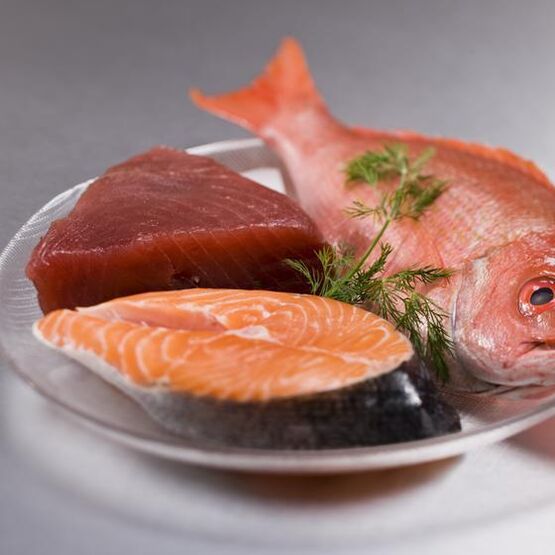
Dinner.Bake fish in the oven (250-300 g).
Functions of representatives of blood group 2
For the farmer, meat and dairy dishes are excluded from the diet.Green light for vegetarianism.The diet is based on an abundance of plant foods.Blood type 2 - positive or negative, as in the case of the first - needs absolutely the same nutrients.Therefore, owners of any Rh factor can safely use the same scheme.
The characteristic features of this group are constancy, sedentism, collectivism and organization.
All functions of health and digestion are taken into account in a specially designed diet.Blood type 2 (positive and negative) gives representatives the following strengths:
- the efficiency of the digestive and immune systems (exclusively when following vegetarianism);
- high adaptation to the diet itself and to the environment.
Unfortunately, the second group also gives owners weaknesses.
These include:
- high threshold for excitability of the nervous system;
- increased sensitivity in the digestive tract;
- immunity open to all infections.
Recommended menu for blood type 2
Day 1
Breakfast.Prepare rice porridge with apricots (250 g) in the morning, drink green tea.
Dinner.Make vegetable cream soup.For that you need carrots, Brussels sprouts, potatoes, pine nuts.A portion is about 250 g. Treat yourself to a salad with tomatoes, cucumbers and radishes.Use olive oil for dressing.The salad can be prepared a little differently.The most important thing is not to forget: if you have a different blood type, your diet must be vegetarian.
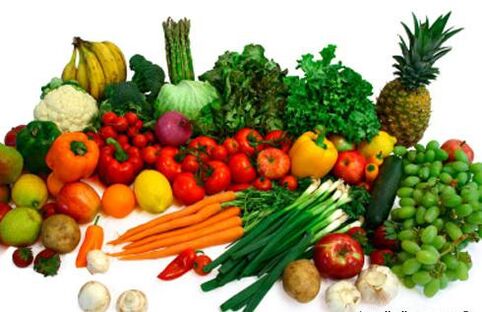
Snacks.Cashews or brazil nuts (50 g) will perfectly satisfy your hunger.And of course one vegetable to choose from – tomato or cucumber.Can be replaced with fruit - apricots or plums (1-5 pcs.).
Dinner.Cook the mushrooms with carrots and zucchini (250 g).Wash it down with pineapple juice.
Day 2
Breakfast.Buckwheat porridge will be an excellent breakfast.It must be prepared with soy milk.Wash down your breakfast with green tea.
Dinner.Sorrel soup with eggs will give you strength.Diversify the menu with a salad of carrots, asparagus and herbs.Cherry juice will improve your tone significantly.
Snacks.Pine or walnuts, almonds (50 g) will help recharge your energy.From fruits - apricots or plums.Prunes or dried apricots (50 g) are recommended.
Dinner.Prepare the turkey fillet in the evening.Let the side dish be rice with vegetables.Charge with vitamins from cranberry juice.
Day 3
Breakfast.In the morning, treat yourself to a vegetable or fruit salad.And you can wash it down with coffee.
Dinner.Prepare a light mushroom soup, season it with vegetables.You will appreciate the salad made with cheese, cucumbers, eggs and apples.
Snacks.Nuts and fruits will help satisfy your hunger.
Dinner.Bake the fish with cooked green beans (250-300 g).
Features of owners of 3 blood groups
These people have an excellent ability to adapt.The diet for blood group 3 is varied.People are flexible, balanced and creative.
Representatives are characterized by strengths:
- high adaptation to both diet and environment;
- stable immunity;
- hardening of the nervous system.
As for weaknesses, there are almost none.An imbalance in nutrition can cause problems.This leads to autoimmune diseases.
Remember that the diet does not depend on the Rh factor.Blood type 3 – negative and positive – need the same nutrients.Therefore, you can safely proceed to nutritional recommendations.
Menu for blood group 3
These people are lucky enough to have a mixed diet.The blood group 3 diet opens up enormous possibilities in the choice of food.
Day 1
Breakfast.Cook rice porridge with apples (250 g).Brew yourself herbal tea of St. John's wort or mint.
Dinner.Cook cream soup of carrots, potatoes and mushrooms (250 g).You can afford a salad with sardines, eggs and cheese.Season it with low-fat crème fraîche or olive oil.
Snacks.Cashews and nuts (Brazilian or walnut) will make you feel better.Serving - approx.50 g. Snack 1 cucumber or 1 carrot.And choose any fruit (1-3 pieces).
Dinner.Cook beef with aubergine and pepper (250 g).
Day 2
Breakfast.In the morning, cook oatmeal (250 g).
Dinner.Cook cream soup of cauliflower (Brussels) sprouts and broccoli.You can afford any fruit salad.
Dinner:Cook the hare meat for the evening.Rice with vegetables would be an excellent side dish.Wash everything down with green tea.
Day 3
Breakfast.Low-fat yogurt will give you strength in the morning.Be sure to add 1 apple to your diet.Drink berry juice.
Dinner.Prepare mushroom soup.Season it with vegetables.And of course – salad.Prepare it from beef, Chinese cabbage, cucumber and coriander.
Snacks.For an afternoon snack, eat nuts or fruit.
Dinner:Bake fish with green beans (250-300 g).
Functions of representatives of 4 blood groups
From a historical point of view, it was formed relatively recently and gained the status of a mystery.Recommended for people who have a positive blood type 4, a diet based on moderation, but mixed.
The strengths of such people include:
- flexibility of the immune and nervous systems;
- combination of the advantages of 2 and 3 blood groups.
For weaknesses:
- tenderness in the digestive tract;
- the openness of the immune system to infections.
Approximate menu for group 4
Day 1
Breakfast.Prepare oatmeal with apricots and apples (250 g).Coffee will help cheer you up.
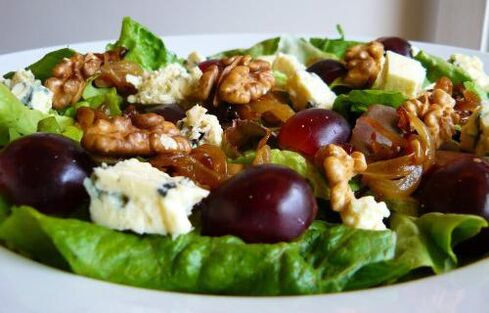
Dinner.Cook vegetable cream soup (250 g).The salad can be made from eggs, cheese, sardines.For dressing, use creme fraiche or olive oil.
Snacks.Almonds or nuts (50 g) will perfectly satisfy your hunger.As for vegetables, you can eat either 1 carrot or 1 cucumber.Choose fruits according to your taste (1-3 pcs).
Dinner.Cook the lamb, add pepper and aubergine (250 g).
Day 2
Breakfast.Prepare rice pudding (250 g).
Dinner.Cream soup made from different types of cabbage is perfect.Any fruit salad.
Snacks.Nuts (50 g), dried apricots or prunes (50 g) and rye bread (1-2 pieces) will be an excellent afternoon snack.
Dinner.Treat yourself to seafood julienne.
Day 3
Breakfast.Eat low-fat yogurt and 1 pear.You can wash it down with sea buckthorn juice.
Dinner.An excellent soup, fried vegetables and salad (from Chinese cabbage, tomato, turkey and cheese) will refresh you perfectly.
Snacks.An afternoon snack can consist of fruit and nuts.You can drink kefir.
Dinner.Bake fish with rice (250-300 g).
Conclusion
The blood type diet is a systematic nutrition plan.It requires a complete revision of the diet and does not at all guarantee good results at a certain time.But based on the developer's opinion, matching the diet with the needs of the blood allows you to get rid of extra pounds.However, this process will only begin when metabolic processes in the body improve.Its author recommends his diet to those who want to gradually lose weight by cleansing all systems.Or for those who have decided to seriously engage in the prevention of diseases, which also have their own specifications, depending on the blood type.